Does this result mean anything medical?
No. It is a joke category in an entertainment test, not a diagnosis. Persistent changes in interest, energy, or daily functioning deserve attention on their own terms.
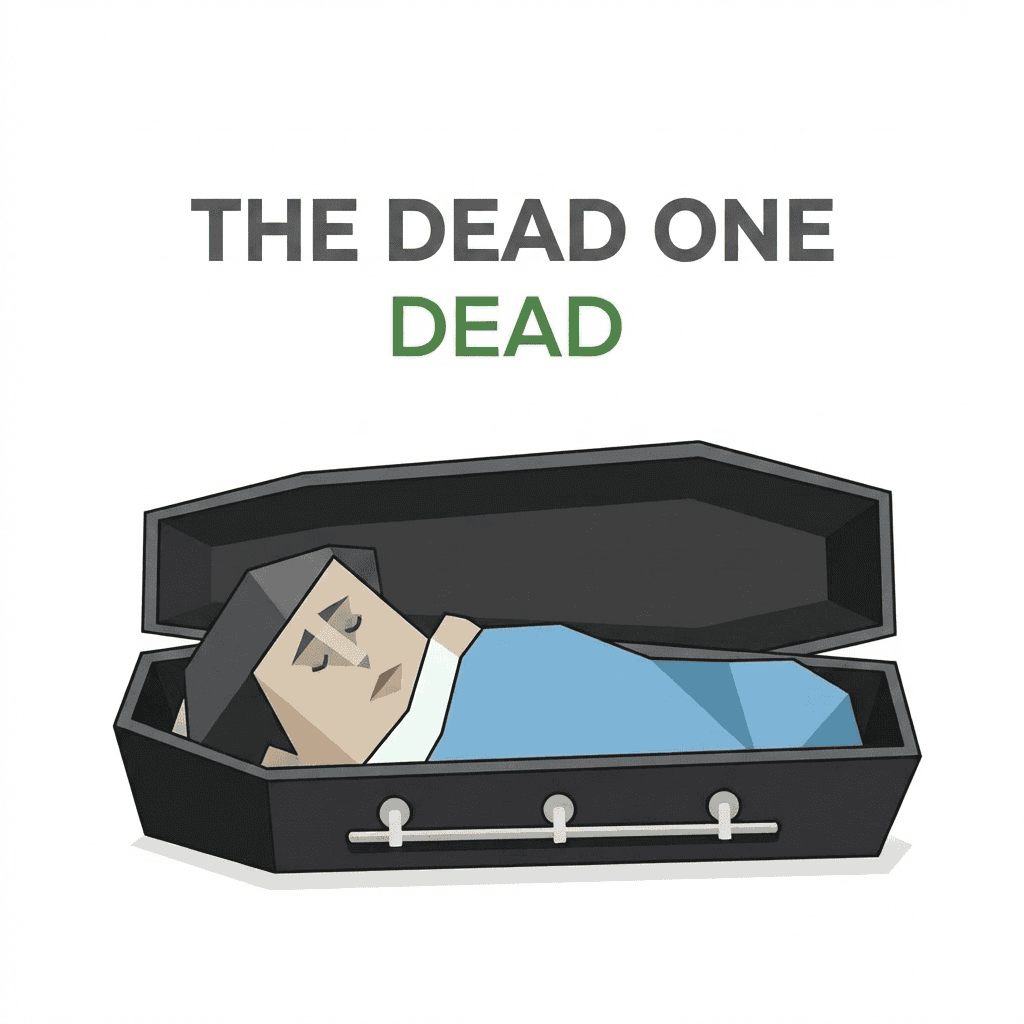
The Dead One
Am I... even alive?
Congratulations, you've tested into the rarest personality known to humankind — though "The Departed" is admittedly a grim name, so you can also call it: Don't Expect Any Drives. The Departed has already seen through all those pointless philosophical musings, and thus appears to have "lost" interest in everything. They look at the world like a top-tier gamer who's beaten every main quest, side quest, and hidden mission, restarted 999 times, and finally realized: this game was never fun to begin with. The Departed is the ultimate sage who has transcended desire and ambition. Their very existence is the most silent and absolute protest against this noisy world.
MONK may understand low pressure company and a need for private space. OJBK can share a modest routine without demanding a dramatic reaction. Tell a close person what contact feels manageable today; they should not have to confuse a quiet mood with a verdict on the whole relationship.
A task with a small visible finish may be more approachable than a distant promise of transformation. Choose one bounded contribution rather than deciding whether you feel inspired enough to become a different person.
For study, open one exercise and identify the first missing piece. A limited question gives you something to ask or practice without requiring a complete life plan before the session can begin.
A quiet response can be mistaken for having no preferences or feelings. You may need simpler questions and less pressure before the answer becomes clear enough to express.
You do not owe an audience a display of enthusiasm. At the same time, the nickname should not become a reason to ignore a real need, avoid every possible source of support, or treat a temporary state as destiny.
No. It is a joke category in an entertainment test, not a diagnosis. Persistent changes in interest, energy, or daily functioning deserve attention on their own terms.
A distant reward may feel too abstract to connect with today's effort. Try a small useful result and see what actually changes, rather than judging yourself for not responding to a slogan.
Yes. Offer a simple activity such as a short walk or a shared meal and explain that quiet company would help. Presence need not be earned through entertaining conversation.
Harder on yourself than anyone else — if someone compliments you, you'll fact-check it first.
You may discount a small contribution because it does not feel impressive.
Your inner channel has a lot of static — frequently stuck buffering on "Who am I?"
Your own preferences can feel difficult to identify under a demand to explain yourself.
You prioritize comfort and safety — no need to put life in sprint mode every single day.
Comfort and safety can outweigh the appeal of another ambitious milestone.
Your relationship alarm system is hair-trigger sensitive — a "seen" with no reply can spiral into a finale.
Uncertainty in a close connection can still activate a quiet alarm.
Emotionally reserved — the door to your heart isn't closed, the security clearance is just intense.
You may offer some care while keeping much of the emotional response reserved.
Need a bit of both closeness and independence — adjustable-dependency type.
You want companionship and independence in an amount you can actually manage.
You view the world through a defensive filter — suspicion first, approach later.
You inspect promises before deciding whether another invitation deserves trust.
Follow rules when it matters; bend them when it doesn't — no needless rigidity.
You accept a practical arrangement without demanding a rigid procedure for everything.
Low on the meaning meter — a lot of things feel like going through the motions.
The larger purpose may feel remote even when a small practical change is useful.
Your avoid-disaster system activates way before your ambition — risk-aversion leads.
Avoiding an unpleasant consequence can be easier to feel than a wish for achievement.
Tends to loop a few extra rounds before deciding — your mental meetings regularly run overtime.
You can keep circling a decision when no option feels especially compelling.
Execution and deadlines share a deep bond — the later it gets, the harder you awaken.
A deadline may concentrate the effort that the distant promise did not awaken.
Socially slow to warm up — making the first move usually requires half a day of psyching yourself up.
You generally prefer a direct invitation over making an unfamiliar social approach.
Strong boundary instincts — get too close and you instinctively step back half a pace.
You keep a strong boundary around private time and space.
You read the room before speaking — balancing honesty and tact.
You consider how to give an honest answer without adding unnecessary hurt.