Do I really have no opinions?
Being comfortable with several outcomes does not mean every outcome is acceptable. Notice what changes your answer: cost, company, effort, or a personal value that was not initially visible.
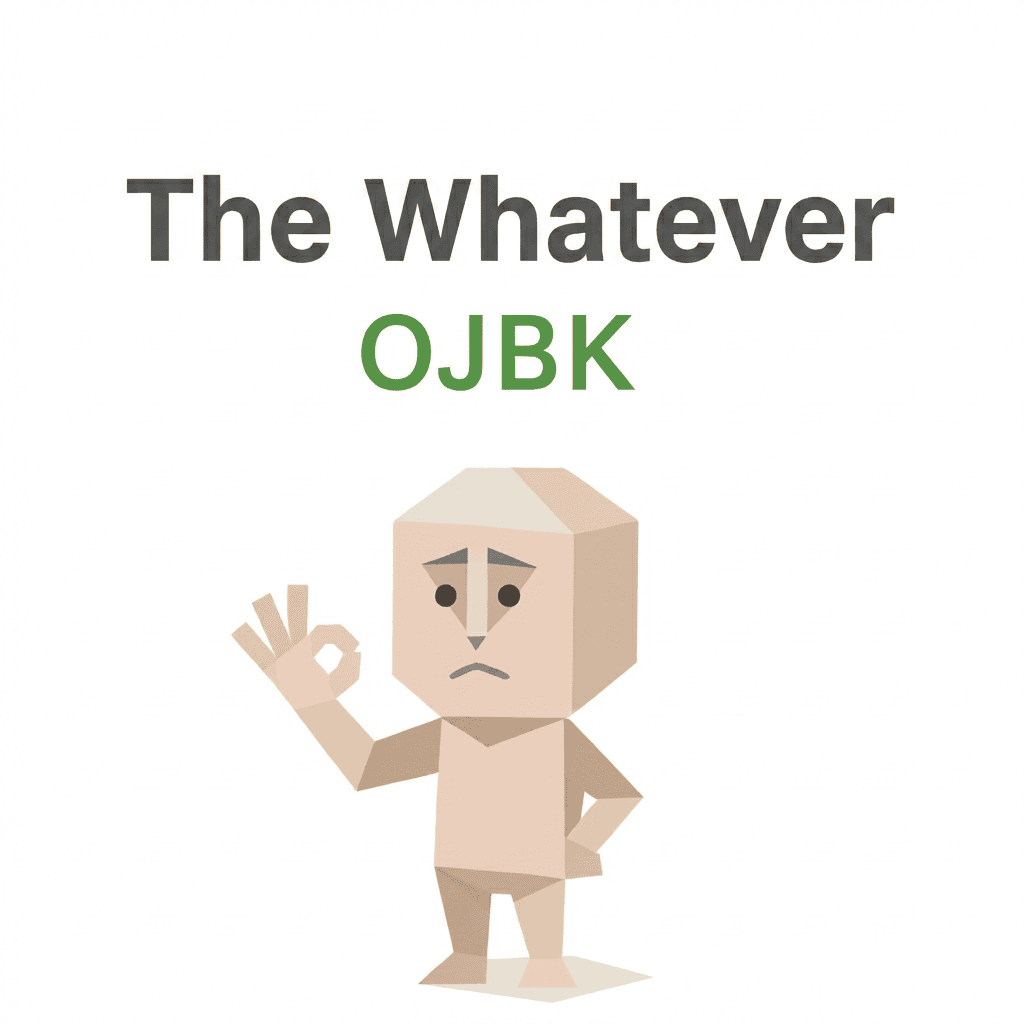
The Whatever
I said what I said.
Let's face the raw essence of this designation: OJBK. This is no longer a personality — it's a ruling philosophy. When mere mortals face the century's greatest dilemma of "rice or noodles for lunch," their brains burn through calories in agonized deliberation. The OJBK personality, with the casual air of an emperor reviewing petitions, floats out two words: "Either's fine." This isn't indecisiveness — this is informing you that your trivial mortal choices are, to His Majesty, mere dust mites. Why no arguments? Because debating the future of the universe with an amoeba is pointless. Why no nitpicking? Because an emperor doesn't care whether the dust at their feet drifts left or right.
Dior-s may share your appreciation for ordinary comfort, while GOGO can bring useful momentum when a plan really does need a first step. Tell them when either option is fine and when something matters. Easygoing companionship still benefits from a clear yes, no, and next time.
You can stabilize a group by distinguishing a genuine requirement from a cosmetic preference. Keep visible commitments so flexibility does not accidentally become uncertainty for someone waiting on you.
In learning, choose a modest recurring session instead of waiting for a dramatic burst of conviction. You can make progress without turning the subject into your entire identity.
People may interpret your calm response as indifference. If you care about the person but not the restaurant, say both things instead of expecting them to infer the difference.
Your calm is valuable when it leaves room for other people. It becomes less useful if it prevents a needed conversation; an unspoken concern does not disappear simply because the surrounding mood stays pleasant.
Being comfortable with several outcomes does not mean every outcome is acceptable. Notice what changes your answer: cost, company, effort, or a personal value that was not initially visible.
They may be carrying the work of choosing. Offer two acceptable options or take one turn deciding, so your flexibility does not leave them managing every detail.
Yes. Reliability needs an honest commitment and follow through, rather than visible anxiety. Put the important promise somewhere you will see it and confirm when it is done.
Confidence fluctuates with the weather: tailwind and you fly; headwind and you turtle up.
You can take a choice in stride while confidence still varies with the situation.
Usually you can recognize yourself, though emotions occasionally hijack your account.
You usually know what is acceptable but emotions can shift the answer.
You're easily propelled forward by goals, growth, or some deeply held conviction.
You still care about a valued commitment despite enjoying an unhurried pace.
Half trust, half suspicion — emotionally you're constantly on a seesaw.
You can trust while checking whether a change means something more.
You invest, but keep an exit strategy — never going full all-in.
You offer company without spending every emotional resource at once.
Need a bit of both closeness and independence — adjustable-dependency type.
You enjoy the security of familiar warmth and mutual reliance.
More inclined to believe in human goodness — you don't rush to sentence the world to death.
You begin by allowing that a changed plan may have an innocent reason.
Follow rules when it matters; bend them when it doesn't — no needless rigidity.
You can use a sensible rule and bend an unimportant convention.
Low on the meaning meter — a lot of things feel like going through the motions.
The larger purpose may feel less urgent than making today manageable.
Your avoid-disaster system activates way before your ambition — risk-aversion leads.
Avoiding an unnecessary problem can motivate more than winning the discussion.
You think, but not to the point of crashing — standard-issue hesitation.
You compare options and then accept a serviceable choice.
Can execute, but it depends on timing — sometimes steady, sometimes vibing.
You may need the approaching deadline to concentrate effort on completion.
If someone approaches, you engage; if not, you don't force it — moderate social elasticity.
You join available company without always arranging the encounter yourself.
Want to be close yet keep a gap — boundaries adjust depending on who it is.
You adjust distance according to the person and the occasion.
Express yourself directly — what's inside usually comes straight out.
You can state an ordinary preference without elaborate social packaging.