Why do I laugh when I want to say something serious?
A joke may make vulnerability feel less exposed. Try labeling the next sentence as serious so the listener knows which part needs an actual response.
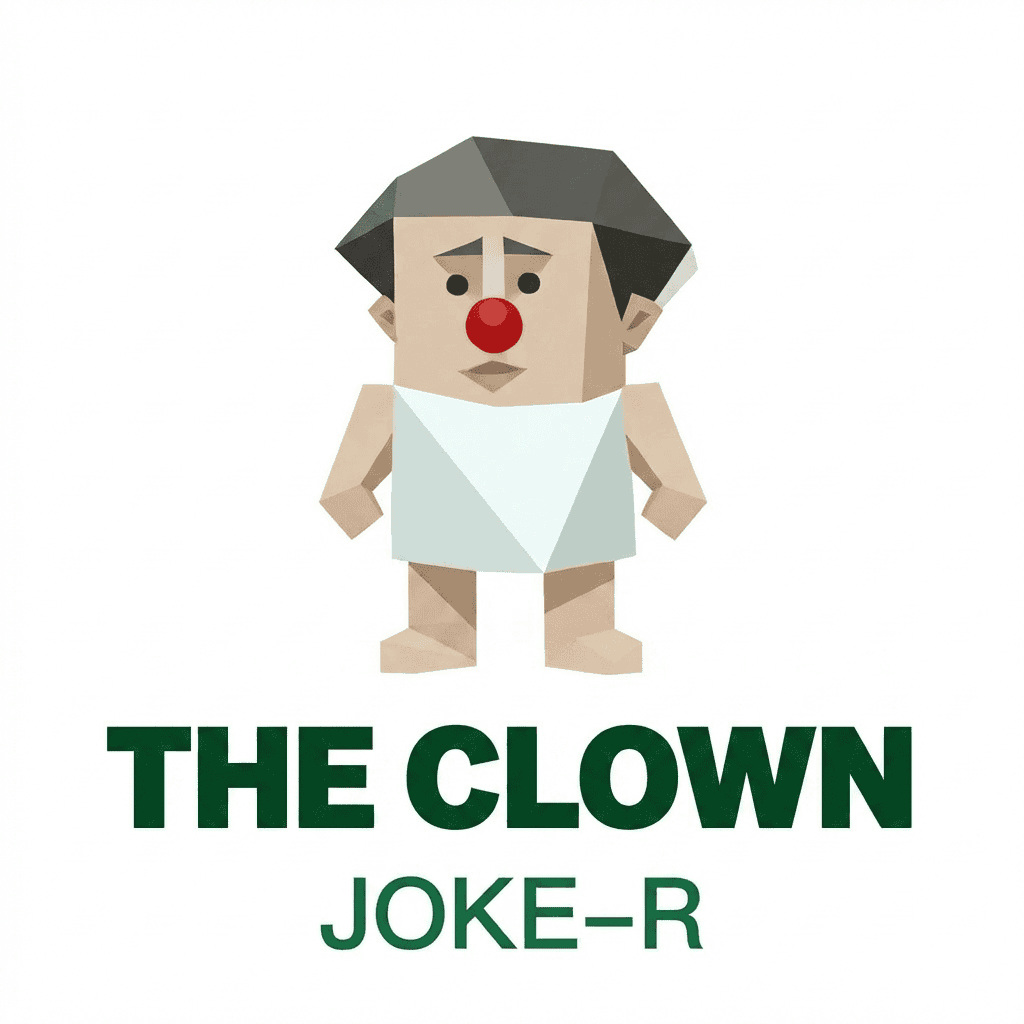
The Clown
Turns out we're all clowns.
Please note: the JOKE-R personality is not a "person" — it's more like a being that wears jokes as clothing. You peel back one layer: it's a joke. Another layer: it's a bit. You keep peeling, and at the very bottom... it's empty. Just a faint echo whispering: Ha, didn't see that coming, did you? JOKE-R is the official vibe commander and sole designated firepower of every social gathering. When they're around, the party never dies. Everyone's doubled over laughing, and the one laughing hardest is usually JOKE-R themselves — using the loudest laughter to drown out the sound of something breaking inside.
MALO may share spontaneous play, provided neither feels required to entertain all evening. MUM can offer a place where silence is welcome too. Say when you are making a joke and when you need a serious answer; another person cannot reliably guess which laugh is covering a request.
Humor can make a difficult topic approachable and help a group recover after an awkward moment. Keep the factual point visible so entertainment does not swallow the task.
When studying, make a memorable comparison and then explain the concept without it. If only the joke remains understandable, the comparison needs another layer of factual work.
Being funny is sometimes mistaken for being impossible to hurt. People may miss your limit if every objection arrives dressed as another part of the performance.
Your wit does not need to become a job that never ends. It is most generous when you can choose to use it and when the people laughing with you can also hear a plain boundary.
A joke may make vulnerability feel less exposed. Try labeling the next sentence as serious so the listener knows which part needs an actual response.
The result cannot establish that. Humor has many uses. Compare the description with your own experience rather than treating every laugh as evidence of a hidden problem.
Tell the group you want a quieter evening and leave some pauses unfilled. A friendship should have room for your presence even when you bring no new material.
Harder on yourself than anyone else — if someone compliments you, you'll fact-check it first.
You may question your value once the room stops visibly laughing.
Your inner channel has a lot of static — frequently stuck buffering on "Who am I?"
You can lose track of your own preference while following the group's mood.
You're easily propelled forward by goals, growth, or some deeply held conviction.
A wish to matter can sit beneath the joke about having no ambitions.
Your relationship alarm system is hair-trigger sensitive — a "seen" with no reply can spiral into a finale.
A quiet response can feel more alarming than an openly mixed reaction.
Once committed, you go all the way — pouring in emotions and energy generously.
You give considerable emotional energy to keeping a connection warm.
Prone to clinginess (giving and receiving) — emotional warmth matters a lot.
You often feel steadier when familiar people stay emotionally close.
You view the world through a defensive filter — suspicion first, approach later.
You inspect other people's intentions before trusting a warm public reaction.
Follow rules when it matters; bend them when it doesn't — no needless rigidity.
You readily look outside convention for a more entertaining approach.
Low on the meaning meter — a lot of things feel like going through the motions.
The larger purpose may remain uncertain after the laughter fades.
Your avoid-disaster system activates way before your ambition — risk-aversion leads.
Avoiding an awkward feeling may prompt the first joke before ambition does.
Tends to loop a few extra rounds before deciding — your mental meetings regularly run overtime.
You can keep searching for the perfect response instead of choosing a plain one.
Execution and deadlines share a deep bond — the later it gets, the harder you awaken.
Your own task may wait until a deadline provides the necessary urgency.
If someone approaches, you engage; if not, you don't force it — moderate social elasticity.
You may need an invitation even when you perform brightly after joining.
Gravitates toward closeness and merging — once comfortable, you quickly pull people into the inner circle.
You adjust personal distance according to how safe the company feels.
You read the room before speaking — balancing honesty and tact.
You balance the real thought with the effect a joke will have on others.