Is the code permission to speak harshly to people?
No. A playful label does not excuse disrespect. You can defend freedom or a boundary without making another person the target of an emotional release.
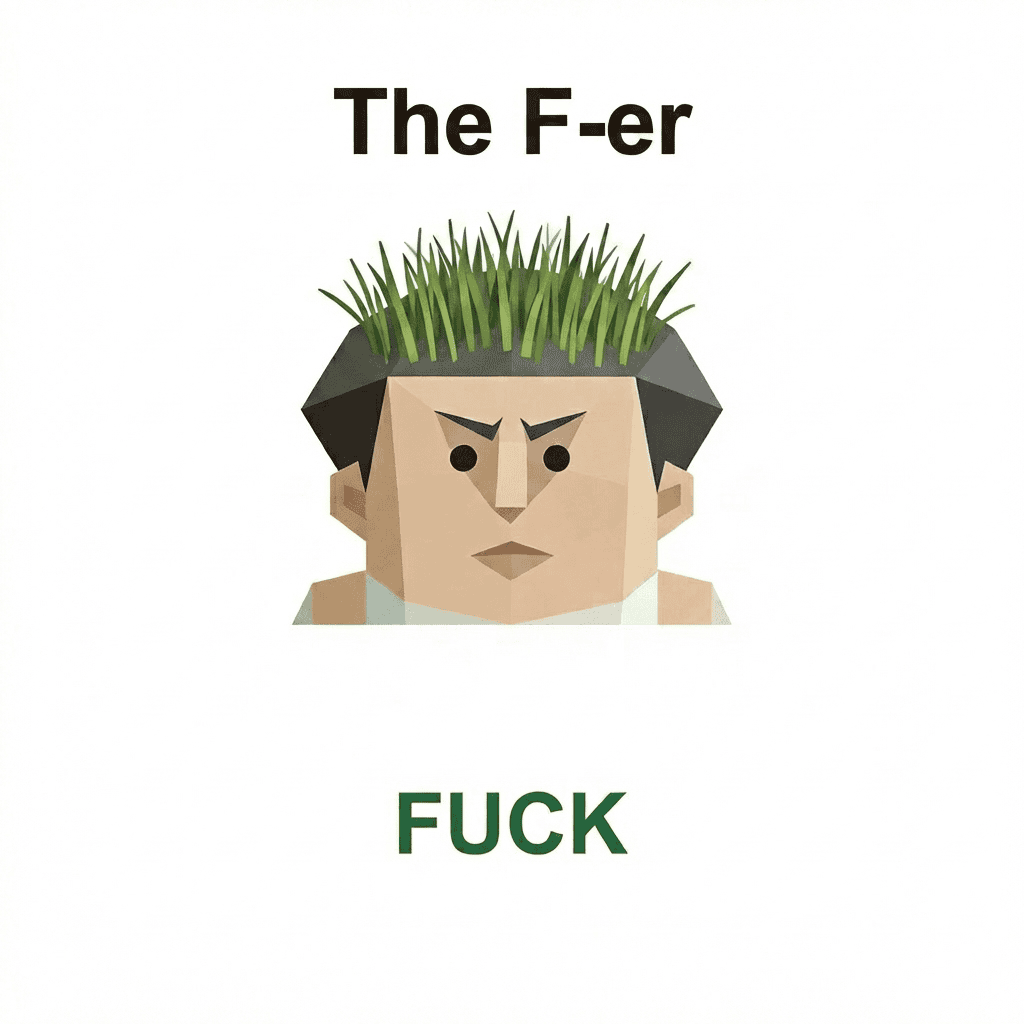
The F-er
F*CK! What kind of personality is this?
Congratulations! You don't even fall within the human spectrum! You've tested into the once-in-a-million-years FUCK personality. Somewhere in the concrete jungle of human civilization, a weed appeared that no herbicide can kill — a human-shaped organism of supernatural vitality. Its scientific name: FUCK. In FUCK's worldview, societal rules are absolutely meaningless. FUCK's emotional switch is a physical toggle with exactly two positions: FUCK YEAH and FUCK OFF. FUCK doesn't just chase instant gratification — they chase the raw life force that rampages through their veins. When everyone else has been domesticated into docile poultry, FUCK is the last wolf howl echoing across the wilderness.
MALO may enjoy your spontaneity while helping make room for play that remains considerate. OJBK can offer a calmer rhythm when every inconvenience starts feeling like a challenge. Respect their different limits: a close relationship is a place for negotiation, rather than a permanent contest about who can stay unrestricted.
Practical experiments can hold your attention more easily than a distant promise of approval. Identify the minimum safety constraint and a concrete result before improvising the method.
In learning, an immediate hands on attempt can reveal the question worth studying. Return to the explanation afterward so the next attempt has more than momentum behind it.
A direct emotional response can be mistaken for indifference to consequences. You may care intensely, but the other person still needs to know what you will do after the first reaction.
Your energy can make change possible without making conflict mandatory. A clear request, an agreed experiment, and a later repair often protect more freedom than a dramatic reaction that leaves the practical issue unresolved.
No. A playful label does not excuse disrespect. You can defend freedom or a boundary without making another person the target of an emotional release.
Restriction may register before the reason behind it. Ask what the rule protects; useful safety limits and needless ceremony deserve different responses.
Yes. Set a small promised outcome and choose your method inside it. Freedom over the route is easier to sustain when others can rely on the destination.
Confidence fluctuates with the weather: tailwind and you fly; headwind and you turtle up.
You can feel capable in the moment while confidence still depends on the setting.
Your inner channel has a lot of static — frequently stuck buffering on "Who am I?"
You may need time to identify the preference beneath an immediate reaction.
You prioritize comfort and safety — no need to put life in sprint mode every single day.
Comfort and freedom can matter more than proving yourself in a status contest.
Your relationship alarm system is hair-trigger sensitive — a "seen" with no reply can spiral into a finale.
Uncertain closeness can make a small disagreement feel more threatening.
Once committed, you go all the way — pouring in emotions and energy generously.
You invest strong feeling in the people and experiences you choose.
Prone to clinginess (giving and receiving) — emotional warmth matters a lot.
You feel steadier with familiar warmth and a strong sense of togetherness.
You view the world through a defensive filter — suspicion first, approach later.
You inspect the possible restriction before trusting a well presented proposal.
If a rule can be sidestepped, it will be — comfort and freedom usually rank first.
You readily question a procedure that blocks a more comfortable practical route.
Sometimes you have a goal, sometimes you want to slack off — life's OS is half-booted.
Meaning may appear in a vivid experience without becoming a permanent mission.
Sometimes you want to win, sometimes you just want to avoid hassle — mixed-motive mode.
You alternate between seeking a satisfying result and avoiding needless hassle.
Tends to loop a few extra rounds before deciding — your mental meetings regularly run overtime.
You can keep revisiting alternatives when none feels freely chosen.
Execution and deadlines share a deep bond — the later it gets, the harder you awaken.
The final deadline may supply the push that routine preparation did not.
More likely to break the ice first and not afraid to stand out in a crowd.
You are willing to make the first visible move in a gathering.
Gravitates toward closeness and merging — once comfortable, you quickly pull people into the inner circle.
You draw familiar people into a close shared circle.
Skilled at adapting your persona to different contexts — authenticity gets dispensed in layers.
You can adjust the expression to the setting while keeping other feelings private.