Must a leader always take charge?
No. Leadership can mean identifying the person with the right expertise and supporting their decision. Taking every wheel creates a bottleneck, even when you drive well.
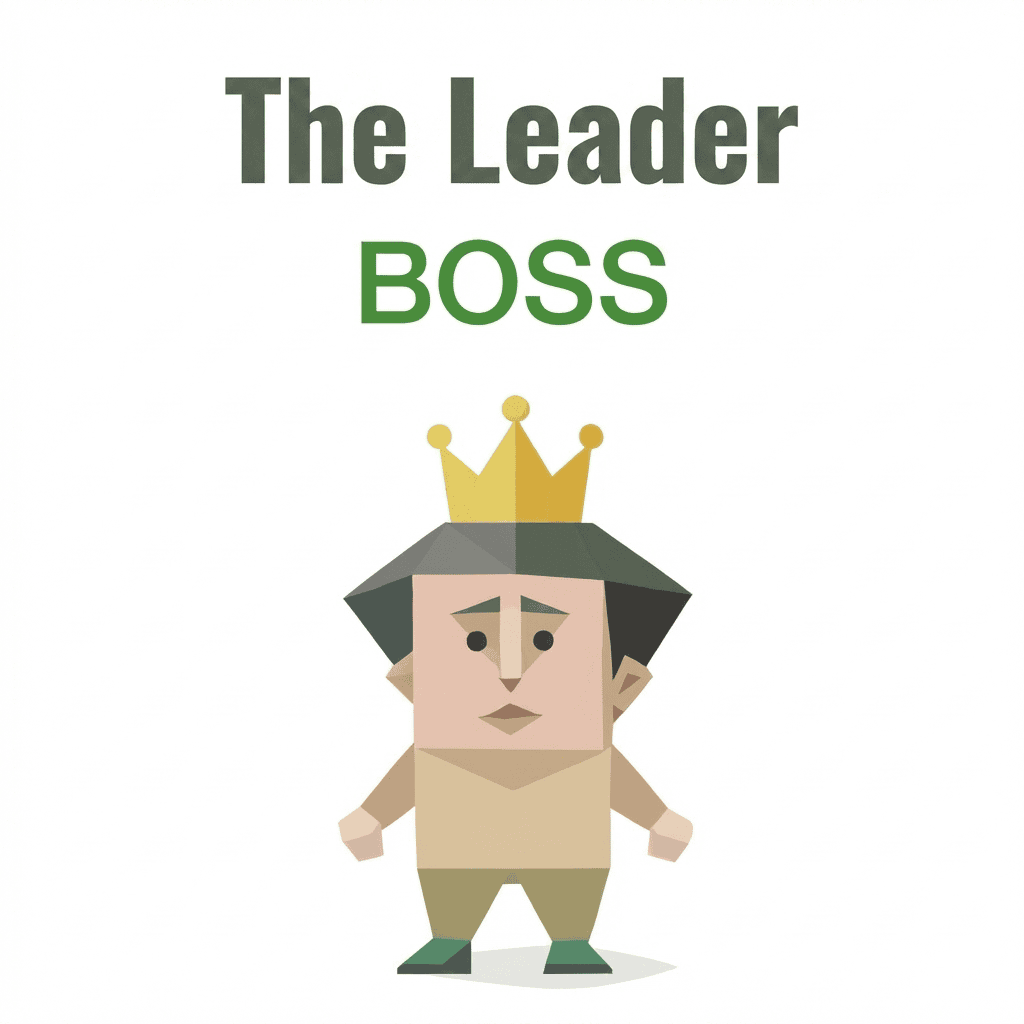
The Leader
Hand me the wheel. I'm driving.
BOSS is someone who always has their hands on the steering wheel. Even when the gas light is on, even when the GPS is having a breakdown, you'll say with a poker face: I'll drive. And then actually get everyone to the destination. This personality operates under its own law of physics — the Eternal Upward Theorem. The BOSS sees the world like a maxed-out player watching a tutorial level. Efficiency is their religion, order is their oxygen. They don't "have leadership energy" — they ARE a human charisma generator. Within a five-meter radius, the air automatically becomes serious and productive. Their idea of "self-improvement" is what normal people call "self-torture." Today: learn a new language. Tomorrow: get a professional certification. Day after: plan to colonize Mars. You say that's too intense? They'll look at you like you're a baby bird: I'm not too hard. You're too soft.
CTRL can share planning discipline if responsibilities are genuinely divided. THAN-K may help you recognize progress without turning affection into another performance review. Ask about a partner's preferred pace before deciding what improvement would be good for them; encouragement needs room for refusal.
You do well when a project needs a decision owner, an observable outcome, and a route through competing demands. Make the review mechanism as clear as the goal.
For learning, combine ambitious practice with a feedback source that can tell you when the method is wrong. More hours on the same approach do not automatically improve the result.
A firm direction can look like emotional indifference. You may care intensely while speaking almost entirely in action items, leaving people unsure whether you heard their concern.
Being the dependable decision maker can make uncertainty feel embarrassing. Naming a genuine unknown early gives others a chance to help, and prevents confidence from becoming an expensive substitute for information.
No. Leadership can mean identifying the person with the right expertise and supporting their decision. Taking every wheel creates a bottleneck, even when you drive well.
You can see the cost of delay, but other people may be clarifying risks you have not considered. Ask what information would let the group move instead of simply raising the pressure.
Accuracy does not automatically create an invitation. Ask whether advice is wanted, explain the relevant consequence once, and respect the other person's authority over their own choice.
You generally know where you stand and won't crumble from a stranger's off-hand remark.
You can defend a difficult call without treating criticism as a personal collapse.
You've got a pretty clear read on your temper, desires, and hard limits.
You know the outcome you want and which constraints you will accept.
You're easily propelled forward by goals, growth, or some deeply held conviction.
A demanding milestone matters enough to justify sustained practice.
You'd rather trust the relationship itself and won't be spooked by every little breeze.
You can trust a colleague without monitoring their every private reaction.
You invest, but keep an exit strategy — never going full all-in.
You invest real concern while avoiding responsibility for every passing mood.
Space is sacred — even in love, you reserve a plot of land that's yours alone.
You need an area of life that is not managed as a joint project.
Neither naive nor full conspiracy theorist — watchful waiting is your default.
You test a proposal before choosing whether to put confidence behind it.
Follow rules when it matters; bend them when it doesn't — no needless rigidity.
You keep procedures that help and change the ones that block delivery.
You operate with direction and roughly know which way you're headed.
You connect a difficult meeting to a destination beyond winning the argument.
Easily ignited by results, growth, and the feeling of forward momentum.
A visible improvement energizes you to tackle the next obstacle.
Decisions come fast and once they're made, you don't look back.
You make a decision when the available evidence is good enough.
Strong drive to push things across the finish line — open tasks feel like a splinter in your brain.
You return to the agreed result until responsibility is clearly handed over.
Socially slow to warm up — making the first move usually requires half a day of psyching yourself up.
You may wait for a useful opening instead of socializing for its own sake.
Strong boundary instincts — get too close and you instinctively step back half a pace.
You maintain a clear line between cooperation and unrestricted personal access.
Express yourself directly — what's inside usually comes straight out.
You are likely to say plainly that the current plan is inadequate.