Why do I end up planning every group trip?
You spot coordination gaps quickly, so filling one feels easier than waiting. Offer a small planning role, then ask others to own the remaining decisions rather than silently adopting them.
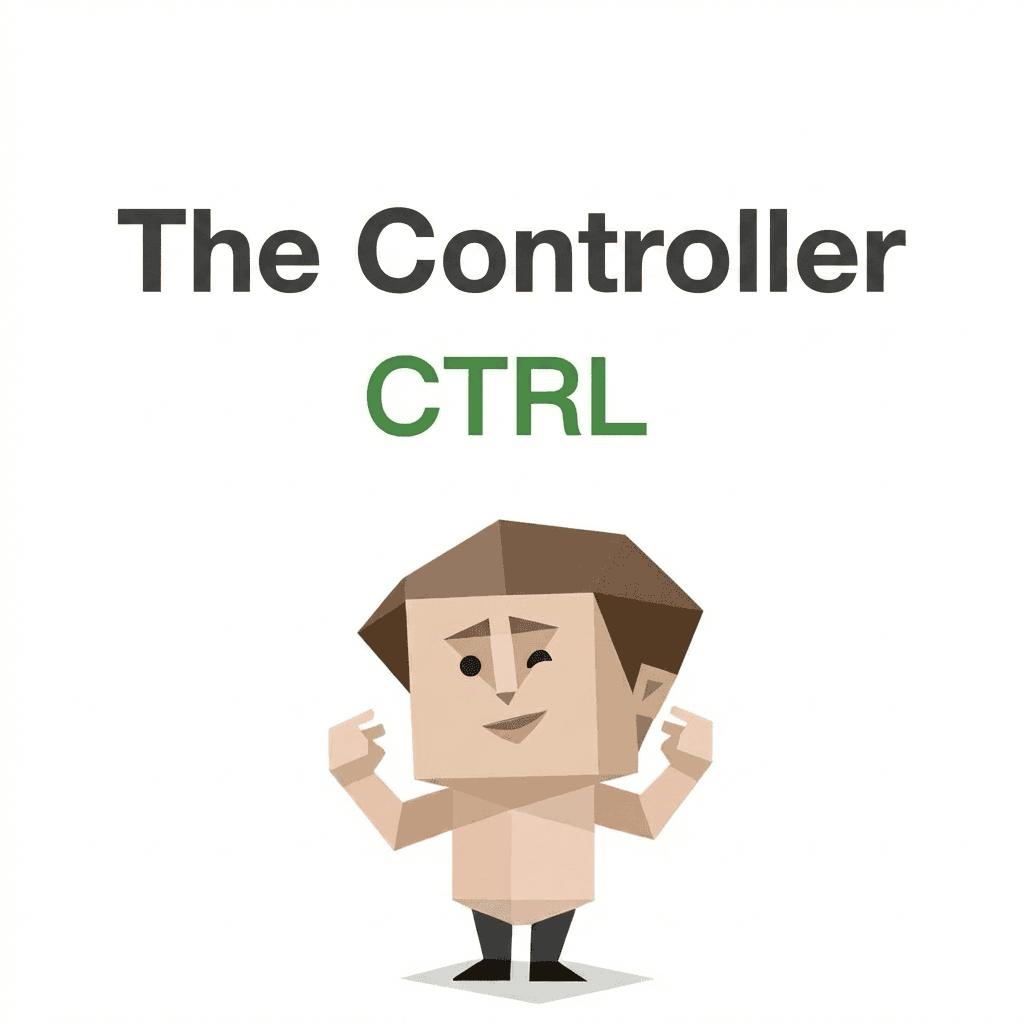
The Controller
See? You're already under my control.
Well well well. You've tested into the rarest personality in the known universe. You are nature's rebellion against entropy itself! 99.99% of so-called successful people are just your cheap knockoffs. The CTRL personality is a walking, talking human task manager. What ordinary people call "rules" are just default settings to you; what mortals call "plans" are your casual doodles. What does it mean to have a CTRL friend? It means your life's GPS just got a military-grade upgrade. CTRL will hit Ctrl+S on your life one second before your train derails, then drag you back on track with an argument so airtight you can't even protest. They're the last backup drive of your chaotic existence — the only reboot button still glowing when the universe crashes.
BOSS can share the responsibility for difficult decisions, provided neither treats the other as an employee. MUM brings attention to how a plan feels to the people living inside it. Neither pairing is a compatibility score; discuss who decides what before organizing somebody else's afternoon.
A complex assignment suits your habit of breaking uncertainty into visible steps. Write the outcome first, then identify dependencies rather than scheduling every minute.
In a study group, your best contribution may be a clear division of research rather than doing everyone's work. Keep the review date visible and make room for findings that change your initial plan.
The bossy reputation often hides a serious concern about preventable chaos. Good intentions still need consent when your proposed solution affects another person's choices.
Being dependable does not make you responsible for every avoidable mistake nearby. A useful boundary separates the consequences you own from the choices you can explain but cannot make for someone else.
You spot coordination gaps quickly, so filling one feels easier than waiting. Offer a small planning role, then ask others to own the remaining decisions rather than silently adopting them.
Yes. A flexible afternoon with a known budget and meeting point can leave plenty of room for surprise. Safety rails and a minute by minute itinerary are different commitments.
Check whether the checklist was agreed or merely distributed. Explain the consequence of the missing step, listen to their alternative, and revise the arrangement if it still meets the shared goal.
You generally know where you stand and won't crumble from a stranger's off-hand remark.
A meeting needs an owner before you volunteer for the role.
You've got a pretty clear read on your temper, desires, and hard limits.
You can name which decisions belong to you and which do not.
You're easily propelled forward by goals, growth, or some deeply held conviction.
The itinerary serves a shared destination rather than a perfect spreadsheet.
You'd rather trust the relationship itself and won't be spooked by every little breeze.
A late message does not immediately cancel an established agreement.
You invest, but keep an exit strategy — never going full all-in.
You check on a teammate without taking over their entire problem.
Space is sacred — even in love, you reserve a plot of land that's yours alone.
You keep an evening for your own plans after coordinating others.
Neither naive nor full conspiracy theorist — watchful waiting is your default.
You offer a clear handoff before assuming the next person will fail.
Strong sense of order — if there's a process, you'd rather follow it than improvise.
A checklist makes the safety steps visible to everyone involved.
You operate with direction and roughly know which way you're headed.
A small deadline is connected to the larger delivery you promised.
Easily ignited by results, growth, and the feeling of forward momentum.
You want a stalled project to show visible progress today.
Decisions come fast and once they're made, you don't look back.
You choose a workable route once the essential constraints are known.
Strong drive to push things across the finish line — open tasks feel like a splinter in your brain.
You follow the unresolved ticket through to a confirmed handoff.
If someone approaches, you engage; if not, you don't force it — moderate social elasticity.
You can convene the meeting without needing to dominate its discussion.
Strong boundary instincts — get too close and you instinctively step back half a pace.
You share useful details but keep some areas outside the group plan.
You read the room before speaking — balancing honesty and tact.
You soften a correction without pretending the missed step never happened.