Why do I keep thinking after everyone else has moved on?
An unresolved assumption may still feel important. Write it down, decide when it matters, and give the question a review time rather than unlimited access to your evening.
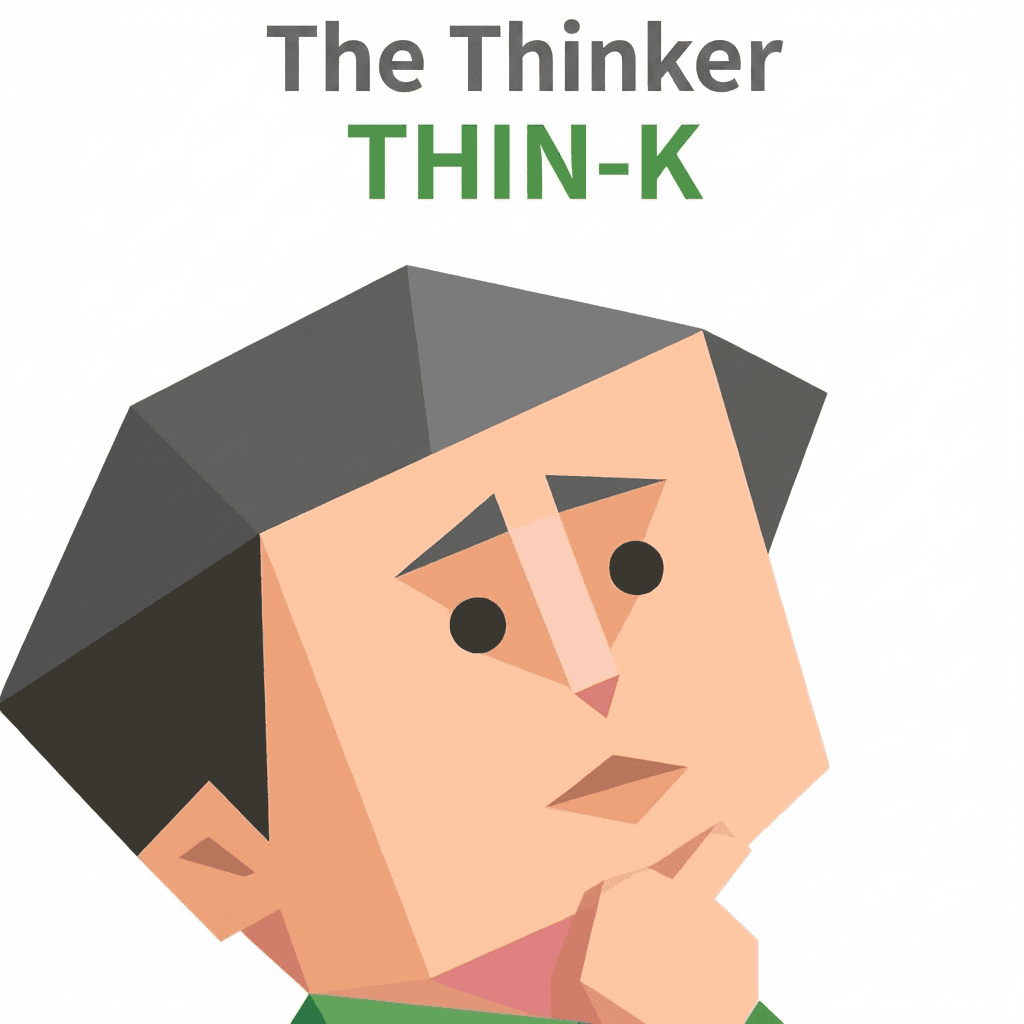
The Thinker
Deep thinking in progress... 100 seconds elapsed.
Research has found that the THIN-K brain is fundamentally different from a normal human's. As the name suggests, your brain is perpetually in thinking mode. You are a supreme judge of information, weighing arguments, evidence, logical reasoning, potential biases, and even demanding a "three-generation ideological background check on the author." In this age of information overload, you never blindly follow the crowd. You weigh pros and cons in relationships and fiercely guard your personal space. When others see you sitting alone, staring into space? Fools. That's not spacing out — that's your brain sorting, filing, and shredding every piece of information it received today.
MONK may respect concentrated solitude without turning it into a relationship dispute. WOC! can enjoy examining a surprising claim with you. Tell a partner when you are thinking and when you are withdrawing; the same silence can otherwise invite very different interpretations.
Research and problems with competing explanations can sustain your attention. Write a provisional conclusion and the observation that would change it, so analysis can lead to a decision.
In learning, explain the argument in plain language and work through a counterexample. A concept becomes more usable when you can identify both what it explains and where it stops applying.
Careful thought can be mistaken for emotional distance. Sometimes the other person wants acknowledgment of an experience rather than an audit of whether the feeling is logically justified.
Your capacity for depth deserves a boundary too. You can leave an interesting question unfinished without losing the ability to return to it, especially when rest will improve the quality of the next round.
An unresolved assumption may still feel important. Write it down, decide when it matters, and give the question a review time rather than unlimited access to your evening.
No. Intuition can suggest what to inspect, while evidence helps test the suggestion. Neither a strong hunch nor a long argument deserves automatic authority.
Compare the cost of delay with the cost of a reversible mistake. If a small trial can resolve the main unknown, more debate may add less than the trial itself.
You generally know where you stand and won't crumble from a stranger's off-hand remark.
You can defend a reasoned view without letting one disagreement erase your confidence.
You've got a pretty clear read on your temper, desires, and hard limits.
You know which questions matter and which intrusions interrupt your concentration.
You prioritize comfort and safety — no need to put life in sprint mode every single day.
Ease and personal comfort can outrank a race for external recognition.
You'd rather trust the relationship itself and won't be spooked by every little breeze.
You can trust the relationship while spending time alone with an unresolved question.
You invest, but keep an exit strategy — never going full all-in.
You invest care but retain some emotional reserve for your own thinking.
Space is sacred — even in love, you reserve a plot of land that's yours alone.
You protect a private area where a thought can remain unfinished.
Neither naive nor full conspiracy theorist — watchful waiting is your default.
You inspect a claim for its hidden cost before accepting a reassuring explanation.
If a rule can be sidestepped, it will be — comfort and freedom usually rank first.
You adapt the investigative method when the evidence calls for a different approach.
You operate with direction and roughly know which way you're headed.
Understanding the problem gives your effort a coherent direction.
Sometimes you want to win, sometimes you just want to avoid hassle — mixed-motive mode.
You may pursue an answer or simply want to remove a persistent uncertainty.
Decisions come fast and once they're made, you don't look back.
You can choose decisively when the key assumptions have finally been checked.
Can execute, but it depends on timing — sometimes steady, sometimes vibing.
You can carry a valuable investigation through to a concrete conclusion.
Socially slow to warm up — making the first move usually requires half a day of psyching yourself up.
You often wait for a substantive opening instead of speaking to fill space.
Strong boundary instincts — get too close and you instinctively step back half a pace.
You keep distance from people who treat attention as an unlimited shared resource.
Skilled at adapting your persona to different contexts — authenticity gets dispensed in layers.
You reveal the polished explanation while keeping some intermediate thoughts private.