Why did this type override an apparently different profile?
The drinking related answer triggers a priority branch in the scoring logic. It takes precedence over the closest ordinary pattern, so the visible code does not summarize every dimension.
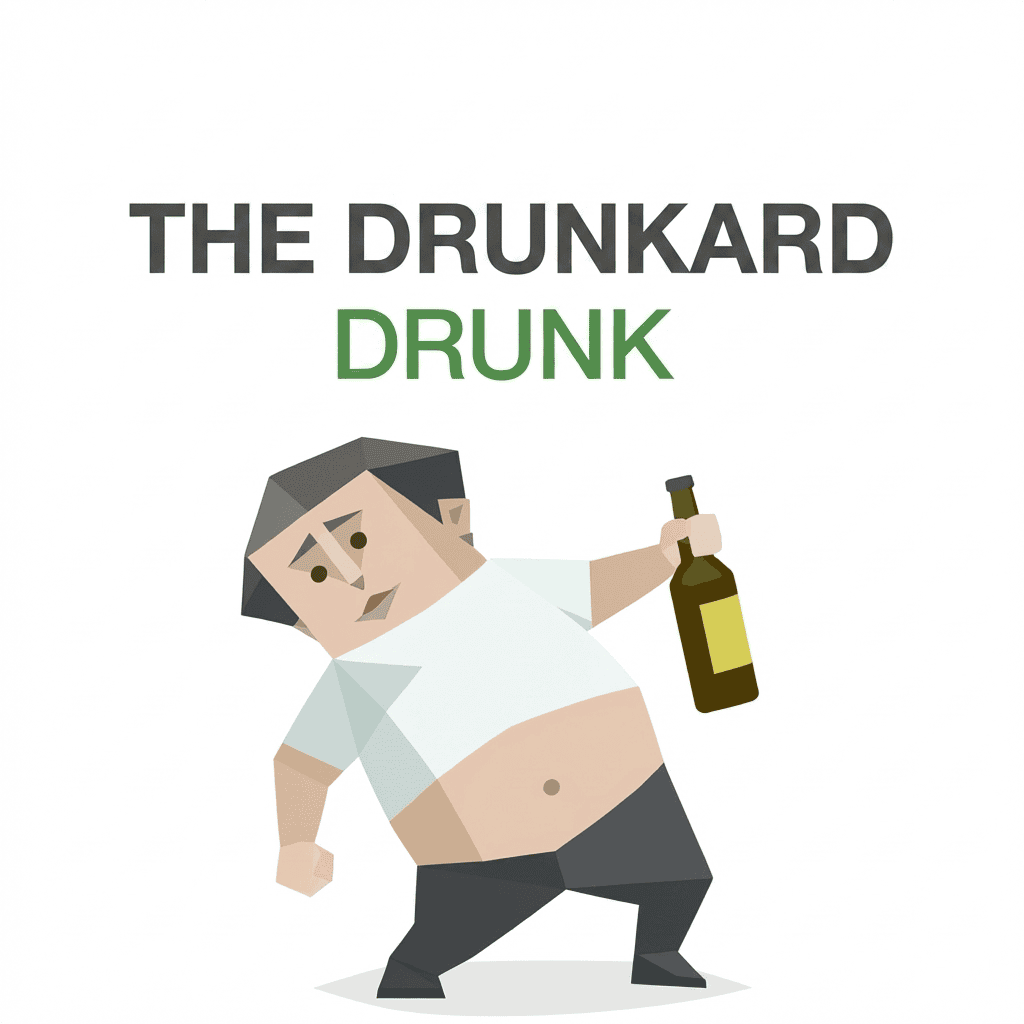
The Drunkard
Liquor burns the throat — can't help but get wasted.
Why do you walk with a wobble? Why are your emotions always running high? Why is your vision doubled? Because what flows through your veins isn't blood — it's Jack Daniel's! It's Fireball! It's a warm PBR! It's that mystery bottle from your uncle's garage! Oh, glorious alcohol — every drop burns, every drop sizzles. Have you already developed the habit of pouring spirits into your water bottle and chugging it like H2O? What magnificent booze! It turns you into a raconteur at dinner, then a philosopher hugging the toilet bowl at 2 AM. It makes you feel like a nightclub poet, the undying flame at the center of the universe — until 10 AM the next morning, when your head feels like a cracked walnut, your lips are crusted with last night's sins, and your soul is curled up in a corner. You finally understand: that loud, table-slapping orator from last night has officially become a drunkard.
MUM may appreciate practical care, while OJBK can make a simple shared plan feel comfortable without turning it into a competition. These links are prompts for discussing pace, boundaries, and everyday support; they are not recommendations about drinking companions or predictions derived from the special result.
A social evening and tomorrow's obligations share the same calendar. Leave room for sleep, preparation, and a realistic journey home instead of treating the next day as somebody else's administrative problem.
For study or work, use your actual attention and energy as the starting point. If a routine repeatedly interferes with commitments, examine that routine directly; the entertaining code neither explains it away nor provides a reason to ignore it.
The label can be mistaken for a finding about consumption or health. The quiz has not measured either. It has taken a special scoring branch, which cannot establish your habits or a medical conclusion.
You are free to decline a social expectation without defending a diagnosis or an identity. A simple preference, a practical plan, and supportive company can be sufficient reasons to choose an evening that works for you.
The drinking related answer triggers a priority branch in the scoring logic. It takes precedence over the closest ordinary pattern, so the visible code does not summarize every dimension.
No. The page is about interpreting a special result and keeping choices intentional. No amount, product, or drinking challenge is required or recommended.
No. A shared result is not evidence about quantity, frequency, dependence, or safety. Ask about actual needs and respect the person's privacy rather than turning a joke into an assessment.
This is a special route, not a fixed fifteen letter pattern. When the relevant answer sets the drinking trigger, the final code becomes DRUNK before the ordinary similarity threshold is considered. The result therefore cannot supply a standard row of high, middle, and low levels for everybody with this label.
The scoring still calculates the fifteen dimension levels and the nearest ordinary type. In this branch it retains that nearest type as a secondary result. If you have your own dimension breakdown, read those values rather than borrowing levels from another person's screenshot or imagining that the special name determines them.
For S1, look at how you assessed your own worth in the ordinary questions. A sociable evening is not a test of confidence, and a confident answer does not establish anything about a person's consumption. Keep the two kinds of information separate.
For S2, ask whether you can state your preferences and limits clearly. Knowing that you want a quiet night or a different drink is a useful everyday example of clarity, but the page cannot infer your actual level from that example alone.
For S3, notice which values move you: improvement, conviction, comfort, or safety. A choice to leave early can serve any of several values. The action needs context before it tells you what mattered to the person making it.
E1 concerns security in close relationships. It asks how readily you trust an established bond when a message or plan is ambiguous. It does not measure how sociable you become in a particular setting or whether a gathering felt lively.
E2 describes emotional investment, while E3 describes space and dependence. Read them together when discussing companionship: you can offer substantial care and still want a private evening. Neither dimension creates an obligation to join a plan that does not suit you.
A1 is about your initial outlook toward people and events. A2 concerns rules and flexibility. A3 concerns felt direction and meaning. Use a recent ordinary example for each, rather than treating one unusual night as the explanation for your whole attitude toward the world.
For Ac1, distinguish seeking progress from preventing a problem. For Ac2, consider how you decide. For Ac3, consider how you execute and finish. Planning a safe journey is one practical action, but no single action establishes all three levels or a permanent work style.
So1, So2, and So3 separate initiating contact, managing interpersonal distance, and adapting expression. A person can be outgoing yet private, or quiet yet direct. Read the separate answers before compressing these three different questions into a story about being the life of a party.
A useful review ends with one real observation and one modest adjustment. This result does not require reenacting its nickname. If the topic connects to a genuine health or safety concern, an entertainment test is not the appropriate tool for resolving that concern.